The Hope of Grace
Ephesians 2:1-10
In his first sermon to Enoggera Baptist Church, pastoral intern Jesse David takes us through Ephesians 2:1–10 and the breathtaking hope found in the grace of God.
Paul begins with a sobering diagnosis: apart from Christ, we are spiritually dead in our trespasses and sins. Our sin is not merely a collection of mistakes or shortcomings; it has separated us from the God who is the source of life. Yet Ephesians 2 contains two of the most hope-filled words in Scripture: “But God.”
God, rich in mercy, makes alive those who were dead. Through Christ’s death and resurrection, our sin and its penalty are dealt with, and those who trust in Christ are brought from death to life—not because of anything they have done, but because of God’s grace.
Jesse explores the danger of minimising either our sin or God’s grace, and reminds us that our unworthiness is not an obstacle to Christ’s mercy. Rather, it is precisely because we cannot save ourselves that we need a Saviour.
Finally, Ephesians 2:10 shows us that grace does not leave us unchanged. We are saved by grace, not by our good works, but we are saved for good works—to live lives of grateful and joyful obedience to the God who has made us alive.
The grace of God can make alive what was once dead.
Ephesians 2:1–10
The Christian message begins with an uncomfortable truth and ends with extraordinary hope.
Ephesians 2:1–10 tells us what we were, what God has done for us in Christ, and what our lives can now become because of his grace. If Christianity is new to you, this passage is a wonderful place to begin understanding the gospel. If you have been a Christian for many years, it is an opportunity to return to the foundation of your faith: we were dead, but God made us alive.
1. The problem: dead in sin
“And you were dead in the trespasses and sins…” — Ephesians 2:1
Paul doesn't describe humanity as merely struggling, wounded, or in need of a little improvement. He says we were dead.
That language is deliberately strong. Sin is more serious than simply breaking a few rules or making occasional mistakes. Sin is our rebellion against God—turning away from the One who made us and gives us life.
We see this right back in Genesis 2:15–17. God gave Adam a clear command: he was not to eat from the tree of the knowledge of good and evil. God established a boundary, and he also warned of the consequence: “you shall surely die.”
When humanity disobeyed God, sin entered the world. The result was separation from God, the source of life.
Romans 5:12 explains that through one man, sin entered the world, and death through sin. The problem is therefore much deeper than individual bad choices. Sin has affected us at the very core of who we are.
Matthew 5:21–22 helps us see this even more clearly. Jesus teaches that God's concern is not simply with outward behaviour. God sees the heart. Anger, hatred and sinful intentions matter to him, even when nobody else sees them.
Sin is not merely something we do. It is a problem within us.
Consider
How does the Bible's description of being “dead” in sin differ from simply being “a bad person”?
Why do you think we are sometimes tempted to minimise the seriousness of sin?
When you think about sin, do you tend to think primarily about outward actions or the condition of the heart?
2. The slavery of sin
Paul continues by describing the way we lived when we were spiritually dead:
“You once walked, following the course of this world, following the prince of the power of the air…” — Ephesians 2:2
Sin isn't passive. We followed the world, followed Satan, and lived according to the desires of our sinful nature.
Paul says that we were “by nature children of wrath” (Ephesians 2:3).
This is confronting language, but it is important because we cannot properly understand grace until we understand what we need to be saved from.
God is loving, but he is also perfectly holy and just. Sin deserves judgment because sin is rebellion against the holy God who created us.
This is why the gospel isn't simply the message that God overlooks our mistakes. God doesn't pretend that sin doesn't matter. Instead, at the cross, Jesus deals with sin.
Our sin deserved God's righteous wrath, and Christ willingly stood in the place of sinners. In his death, Jesus bore the judgment that our sin deserved. This is the heart of penal substitutionary atonement: Christ takes our penalty so that those who trust in him can receive forgiveness and life.
The seriousness of our sin therefore makes the grace of God even more astonishing.
3. The turning point: “But God”
After three verses describing our helpless condition, Paul changes direction:
“But God, being rich in mercy…” — Ephesians 2:4
These may be two of the most hope-filled words in the Bible.
We were dead.
But God.
We were enslaved to sin.
But God.
We were under judgment.
But God.
God did not wait for us to make ourselves worthy. He did not wait until we had cleaned up our lives sufficiently to approach him. While we were dead in our sins, God acted.
Paul says that God:
made us alive together with Christ;
raised us up with Christ;
seated us with Christ in the heavenly places.
The Christian gospel is therefore not fundamentally a story about people finding their way back to God. It is the story of God rescuing people who could not rescue themselves.
Jesus died in our place, bearing the penalty of our sin. He then rose from the dead in triumph. The resurrection demonstrates that sin and death have been defeated.
The same God who raised Christ from the dead gives spiritual life to those who belong to Christ.
This is grace.
Grace means that God gives what we do not deserve. We cannot earn salvation. We cannot make ourselves spiritually alive. We come to God empty-handed, trusting in what Christ has done.
4. Saved by grace, not by works
Paul makes this especially clear:
“For by grace you have been saved through faith. And this is not your own doing; it is the gift of God…” — Ephesians 2:8
Our salvation is not something we accomplish.
We don't become Christians because we are good enough.
We don't earn God's forgiveness by doing more good things than bad things.
We don't persuade God to save us because of our religious performance.
We are saved by grace through faith.
Faith means trusting in Christ—relying on him and what he has done rather than relying on ourselves.
Paul goes so far as to say:
“not a result of works, so that no one may boast.” — Ephesians 2:9
There is no room for boasting before God.
The person who has lived a relatively respectable life and the person who has made terrible mistakes both come to God in exactly the same way: through the grace of Christ.
Our only contribution is our need.
This protects us from two opposite errors.
Minimising sin: “My sin is too big for God's grace.”
Sometimes we look at our sin and think we have gone too far for God to forgive us.
But that misunderstands grace.
Jesus already knew the full extent of your sin when he went to the cross. He did not die for a cleaned-up version of you. Christ came to save sinners.
Your sin is serious—but God's grace is greater.
Minimising grace: “I can save myself.”
The opposite danger is believing that our sin isn't really that serious. We think that if we simply try harder, become more moral, or become more religious, we can make ourselves acceptable to God.
But if we could save ourselves, we wouldn't need a Saviour.
Ephesians 2 tells us that we were dead. Dead people don't resuscitate themselves.
The gospel therefore destroys both despair and pride.
There is no reason for despair because God's grace is greater than our sin.
There is no reason for pride because salvation is God's gift.
5. Saved for good works
There is one more important truth in this passage.
Paul says:
“For we are his workmanship, created in Christ Jesus for good works…” — Ephesians 2:10
Notice the order.
We are not saved because of our good works.
We are saved for good works.
Good works are not the root of our salvation; they are the fruit.
We don't obey God in order to make him love us. We obey because, in Christ, God has already shown us his grace.
A Christian can therefore live a life of joyful obedience—not desperately trying to earn God's favour, but responding gratefully to the favour already given.
God makes us alive, and then he begins to transform how we live.
The Christian life is therefore not “try harder so God will accept you.”
It is:
God has shown me mercy in Christ. Now, because of his grace, I want to live for him.
6. The hope of grace
Ephesians 2:1–10 takes us from death to life, from slavery to freedom, from judgment to mercy, and from self-reliance to grace.
The hope of the Christian is not that we are better people than we once were.
The hope is Christ.
The hope is that the God who raised Jesus from the dead can make alive what was once dead.
If you are exploring Christianity, the invitation of this passage is not to first make yourself worthy of God. You cannot.
Instead, come to Christ.
Bring your sin. Bring your guilt. Bring your failures. Bring your inability to save yourself.
And receive his mercy and grace.
If you are already a Christian, remember where your salvation came from. You did not earn it. You cannot boast in it. You received it as a gift.
And because God has made you alive in Christ, you can now live—not to earn his love, but because you have already received it.
Reflect and pray
Take some time to consider these questions:
What does Ephesians 2 teach me about the seriousness of my sin?
What does this passage teach me about the character of God?
What do the words “But God” mean for someone who knows they cannot save themselves?
Am I tempted more towards despair because of my sin, or pride because of my perceived goodness?
Am I trusting in Christ's work for my salvation, or am I still trying to earn God's acceptance?
How should knowing that I am saved by grace change the way I live?
What would joyful obedience look like in my life this week?
Pray:
God, thank you that when I was dead in my sin, you acted in mercy. Thank you for sending Jesus to bear the judgment my sin deserved and to rise again in victory over sin and death. Help me to stop trusting in myself and to trust in Christ. Thank you that salvation is your gift of grace. Having received your mercy, help me to live a life of grateful and joyful obedience. Amen.

Prayer: Forgive Us

Matthew 6:9-13
Mike takes us through part 1 of Matthew 6:12 and forgiveness in the Lord's prayer. The focus this week is on asking God to "forgive us our debts".
What are our debts, and what does it mean to truly repent? God gives us the story of David's debts in 2 Samuel 11 & 12 and an example of true repentance in Psalm 51.
Prayer: Our Daily Bread
Mike explains how our Father:
1) Cares about our needs
2) Teaches us to trust Him daily
3) Has given us the bread of life
He is not just the provider, but also our provision.
Prayer: Your Kingdom Come
Matt reflects on what Jesus means when he prays "Your kingdom come, your will be done on earth as it is in heaven"
Jesus teaches us to pray God centred prayers, that draw us to seek his will.
He also teaches us to pray for the work of his kingdom here on earth, as well as the hope of the kingdom to come.
Prayer: Hallowed be Your Name
Prayer — Matthew 6:5-13
A Warning (v5-9)
Approval of people
Performative / Impressive to God
A Blueprint (v9-13)
Relationship - Who am I praying to?
Adoration - What do I thank/give adoration to God for?
Hope - What am I longing for God to do?
Dependence - What do I need from God today?
Repentance - What do I need to confess?
Protection - Where do I need Gods protection to not wander from him?
A Confidence (v9)
Our Father - Personal
in heaven - Transcendent
In this sermon, we examine what it means to ‘hallow’ God’s name. We look at:
What Jesus puts first.
How we are sadly all ‘hallowers’ of idols.
Who should be first for us.
The glory of the cross.
Ultimately, we see that us praising God completes our joy in Him.
Prayer: Pray Like This
Prayer — Matthew 6:5-13
A Warning (v5-9)
Approval of people
Performative / Impressive to God
A Blueprint (v9-13)
Relationship - Who am I praying to?
Adoration - What do I thank/give adoration to God for?
Hope - What am I longing for God to do?
Dependence - What do I need from God today?
Repentance - What do I need to confess?
Protection - Where do I need Gods protection to not wander from him?
A Confidence (v9)
Our Father - Personal
in heaven - Transcendent
Prayer — Matthew 6:5-13
A Warning (v5-9)
Approval of people
Performative / Impressive to God
A Blueprint (v9-13)
Relationship - Who am I praying to?
Adoration - What do I thank/give adoration to God for?
Hope - What am I longing for God to do?
Dependence - What do I need from God today?
Repentance - What do I need to confess?
Protection - Where do I need Gods protection to not wander from him?
A Confidence (v9)
Our Father - Personal
in heaven - transcendent

Scapegoat
Scapegoat — Leviticus 16.20-22
The substitution of our shame and guilt by Jesus.
Understanding the problem
Effects from God
Effects on Me
False solutions
Real Solutions

Scapegoat — Leviticus 16.20-22
The substitution of our shame and guilt by Jesus.
Understanding the problem
Effects from God
Effects on Me
False solutions
Real Solutions
Prayer: Ask. Seek. Knock.
In the first sermon of our new mini-series on prayer, Pastor Matt Maloney explores Isaiah 31:1–9 and Judah's misplaced trust in Egypt. The passage challenges us to consider what our prayerlessness reveals about where we place our confidence, while reminding us of God's covenant faithfulness and His fierce protection of His people. Ultimately, prayer is presented as the response of those who have been rescued by God's grace and given every reason to trust Him.
Prayer — Luke 11:1-13
Today, in our next sermon on Prayer, we look at the concept to
Pray like the Son
Pray to the Father
Pray for the Spirit
Jesus, unwraps this further in the parable in Luke 11. Jesus tells His disciples:
9 And I tell you, ask, and it will be given to you; seek, and you will find; knock, and it will be opened to you. 10 For everyone who asks receives, and the one who seeks finds, and to the one who knocks it will be opened. Luke 11:9-10 ESV
We are to ask. We are to seek. We are to knock.
What do you most need from God right now?
Thankfulness Sunday
In the first sermon of our new mini-series on prayer, Pastor Matt Maloney explores Isaiah 31:1–9 and Judah's misplaced trust in Egypt. The passage challenges us to consider what our prayerlessness reveals about where we place our confidence, while reminding us of God's covenant faithfulness and His fierce protection of His people. Ultimately, prayer is presented as the response of those who have been rescued by God's grace and given every reason to trust Him.
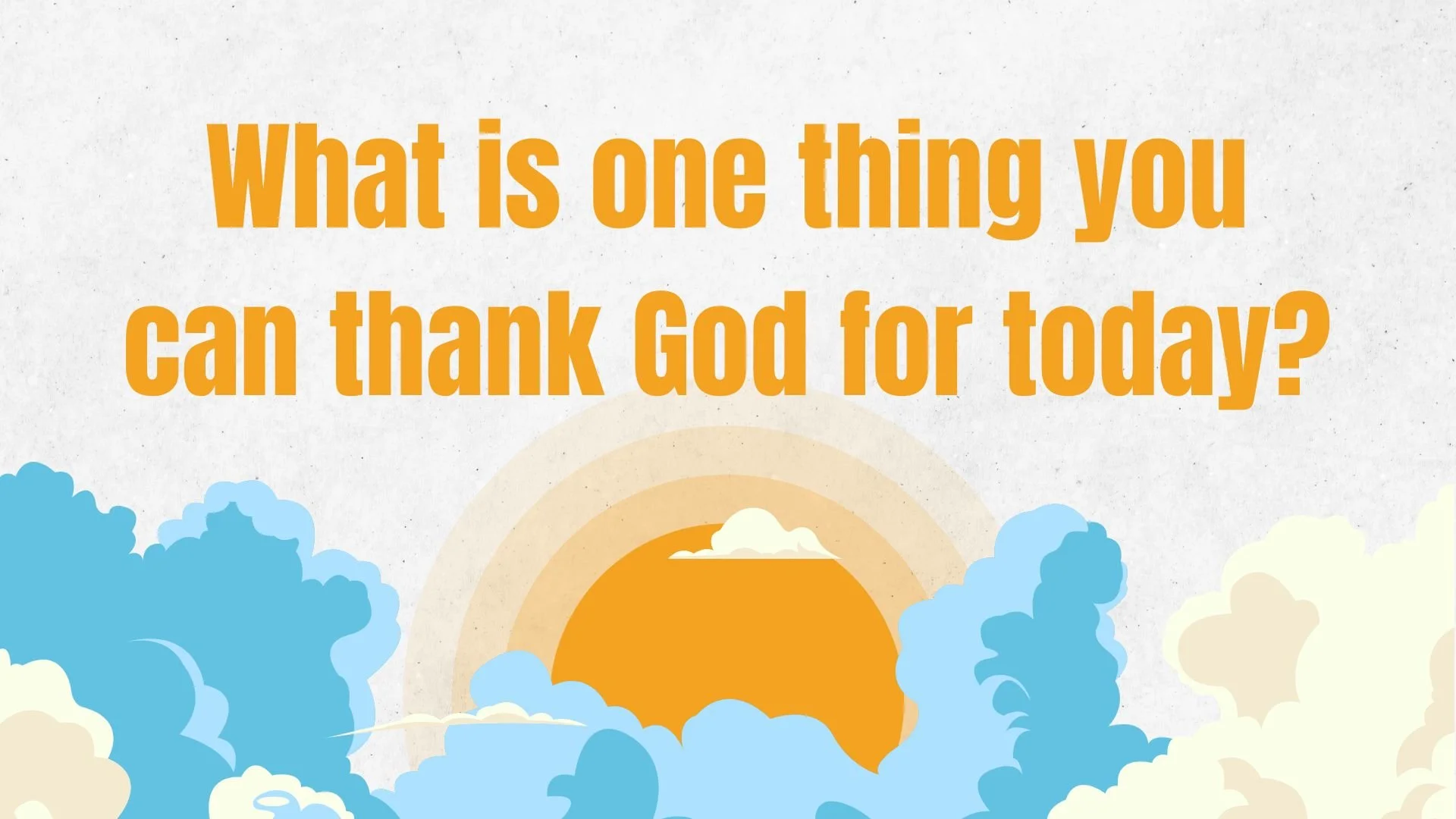
Thankfulness Sunday
In this special sermon, we gather together at Enoggera to give thanks to the Lord for all the blessings He has bestowed on us in our lives. Pastor Matt preaches on passages from Colossians, Romans and Thessalonians that examine the theme of gratitude.
Prayer: Trusting the God Who Saves
In the first sermon of our new mini-series on prayer, Pastor Matt Maloney explores Isaiah 31:1–9 and Judah's misplaced trust in Egypt. The passage challenges us to consider what our prayerlessness reveals about where we place our confidence, while reminding us of God's covenant faithfulness and His fierce protection of His people. Ultimately, prayer is presented as the response of those who have been rescued by God's grace and given every reason to trust Him.
Prayer — Isaiah 31:1–9
In the first sermon of our new mini-series on prayer, Pastor Matt Maloney takes us to Isaiah 31, where Judah is confronted with the danger of trusting earthly strength rather than the Lord. Faced with the overwhelming threat of Assyria, Judah looked to Egypt for security instead of turning to God. Through this passage, we are challenged to recognise that our neglect of prayer can reveal a deeper problem of misplaced trust. Yet Isaiah also gives us a beautiful picture of God's fierce covenant faithfulness: He is the God who watches over, protects, and saves His people. Ultimately, this points us to the far greater salvation accomplished through Christ, reminding us that prayer is the response of those who have been rescued by grace and who therefore have every reason to trust God rather than anything else.
Prayer: Trusting the God Who Saves
Isaiah 31:1–9
Pastor Matt Maloney begins a new mini-series on prayer by confronting a deceptively simple question: What does our prayer life reveal about where we place our trust?
The Bible contains wonderful promises concerning prayer, but prayer is not merely a Christian discipline to be added to an already busy life. Our approach to prayer exposes something deeper about our relationship with God. When we pray, we acknowledge our dependence upon Him. When we consistently fail to pray, we can reveal that we are looking elsewhere for the security, wisdom, control, and rescue that only God can ultimately provide.
Isaiah 31 gives us a powerful Old Testament picture of this problem.
1. Judah looked for salvation in the wrong place
The historical setting is one of crisis. Assyria was the great military power of the region, and its armies threatened Judah. The northern kingdom of Israel had already fallen, and Judah was now faced with the terrifying prospect of Assyria turning its attention fully toward Jerusalem.
Rather than trusting the Lord, Judah sought security through an alliance with Egypt.
Isaiah begins:
“Woe to those who go down to Egypt for help…”
The issue was not simply that Judah had made a poor political calculation. Their political decision revealed a spiritual problem. They had placed their confidence in horses, chariots, and military strength rather than in the Lord.
They were behaving like the surrounding nations.
This is important because Judah already knew who God was. The Lord had rescued Israel from Egypt, established His covenant with them, and repeatedly demonstrated His faithfulness. They had every reason to trust Him.
Yet when crisis came, their instinct was not to seek God but to seek another source of security.
That exposes something uncomfortable about the human heart: we can know about God while functionally trusting something else.
2. The absence of prayer can reveal misplaced faith
This is where the passage speaks powerfully into the Christian life.
We can easily become people who pray only after every other option has been exhausted. We worry, strategise, seek advice, attempt to control circumstances, and turn to earthly resources—and only then remember to pray.
Prayer becomes the final resort rather than the first response.
But Isaiah forces us to ask why.
If prayer is fundamentally an expression of dependence upon God, then persistent prayerlessness may reveal that we do not actually believe God is sufficient for the situation before us.
The problem is therefore deeper than simply having a poor prayer routine. Prayerlessness can expose misplaced faith.
Just as Judah's alliance with Egypt revealed where they had placed their confidence, our functional dependence upon money, relationships, competence, possessions, planning, status, or our own ability to control circumstances can reveal where our hearts are really looking for salvation.
The question is not whether we trust something. We always trust something.
The question is: Who or what are we trusting?
3. God's covenant faithfulness makes their unbelief all the more serious
Judah's failure is particularly tragic because God had already bound Himself to His people through His covenant.
The Lord had rescued Israel from slavery in Egypt. He had brought them into the land and established them as His people. His relationship with Israel was not based upon their ability to save themselves, but upon His gracious covenant commitment.
Consequently, Judah's decision to seek Egypt was not merely foolish—it was an expression of unbelief.
They were acting as though the Lord could not be trusted.
This gives prayer a profoundly theological foundation. We pray because God has first made Himself known to us as the faithful God.
Prayer is therefore not an attempt to persuade a reluctant God to care about us. Nor is it a technique by which we manipulate God into giving us what we want.
Rather, prayer is the response of faith to the God who has already revealed Himself as trustworthy.
The Christian does not approach God hoping that He might become gracious. We approach Him because, in Christ, God has already demonstrated His grace toward us.
4. The remarkable picture of God's protection
The rebuke of Isaiah 31 is accompanied by extraordinary encouragement.
In verse 4, Isaiah compares the Lord to a lion that refuses to surrender its prey. Even when shepherds gather to drive it away, the lion is not frightened.
The image is striking: God is fiercely committed to protecting His people.
Then verse 5 gives another picture:
“Like birds hovering, so the LORD of hosts will protect Jerusalem…”
The imagery communicates both strength and tenderness. God is not distant or indifferent toward His people. He sees them, watches over them, and acts on their behalf.
There is nothing happening in the lives of God's people that escapes His notice.
This gives us an important corrective to our fears. When we face circumstances that appear overwhelming, our instinct can be to focus entirely upon the size of the problem.
Isaiah redirects our attention to the character of the God who stands over the problem.
The Assyrians were powerful.
But God was greater.
5. “Turn back to him”
The heart of Isaiah's message comes in verses 6–7:
“Turn to him from whom you have deeply revolted…”
The call is fundamentally a call to repentance.
Judah must abandon its idols and return to the Lord.
This is important for understanding prayer. The answer to prayerlessness is not simply to become better at performing a religious activity. We need to turn back to God Himself.
Prayer is relational before it is methodological.
The fundamental question is not, “How can I improve my prayer life?” but, “Do I actually believe that God is worthy of my trust?”
As faith turns toward God, prayer follows.
And as we understand more deeply who God is, prayer becomes less of a duty and more of a natural response to His character and grace.
6. God alone is the true Saviour
The final verses of Isaiah 31 promise that Assyria will fall—not because Judah's military alliance succeeds, but because the Lord Himself will intervene.
The salvation of Jerusalem ultimately comes from God.
The wider biblical account records the extraordinary fulfilment of this promise. In Isaiah 37 and 2 Kings 19, the Lord strikes the Assyrian army, with 185,000 Assyrian soldiers falling in one night. Sennacherib subsequently returns to Nineveh and is killed by his own sons.
The point is not merely that God can win military battles.
The point is that God is the Saviour of His people.
Judah did not need Egypt to accomplish what only God could do.
7. The gospel reveals an even greater salvation
This is where the passage ultimately points beyond Judah's immediate circumstances.
The rescue of Jerusalem from Assyria was extraordinary, but it pales in comparison with the salvation God has accomplished for His people in Jesus Christ.
Assyria threatened Judah with death.
But sin brought humanity under the judgment of God.
Judah needed deliverance from an earthly enemy.
We need deliverance from sin, death, and the righteous judgment we deserve.
And God Himself has provided that salvation through Christ.
The gospel therefore gives Christians the deepest possible reason to pray.
We do not pray in order to persuade God to save us.
We pray because God has already saved us by grace.
At the cross, God accomplished what no earthly power could accomplish. Christ defeated sin and death and brought His people into the kingdom of God.
If God has done this for us, why would we ultimately trust anything else?
8. Prayer as the response to the gospel
This provides a helpful way of understanding Christian prayer.
Prayer is an act of faith because it says:
“God, I cannot save myself. I cannot control this situation. I cannot see the future. But I know who You are, and I trust You.”
Prayer is therefore deeply connected to the gospel.
The gospel tells us that we are dependent upon grace.
Prayer is the lived expression of that dependence.
The gospel tells us that God has acted decisively for His people.
Prayer responds by trusting Him.
The gospel tells us that we have been brought near to God through Christ.
Prayer enjoys that access.
And the gospel tells us that our ultimate hope is not found in earthly powers but in God Himself.
Prayer therefore turns our hearts away from the false saviours we instinctively run toward and back toward the true Saviour.
9. A searching question for Christians
Isaiah 31 therefore confronts us with a searching question:
When life becomes difficult, where do we instinctively run?
Do we run first to our own abilities?
To money?
To relationships?
To experts?
To planning?
To distraction?
To control?
Or do we turn to the Lord?
Our prayerlessness may reveal more about our theology than we realise.
If we genuinely believe that God is sovereign, wise, good, faithful, powerful, and committed to His people, then prayer makes sense.
If we genuinely believe the gospel—that God has given His Son to save sinners—then we have every reason to approach Him with confidence.
Prayer does not begin with our ability to pray well.
It begins with God's character and God's grace.
Conclusion
Isaiah 31 calls God's people away from false saviours and back to the Lord.
Judah looked to Egypt because Egypt appeared tangible, powerful, and immediately useful. Yet God reminds them that their true security was never found in horses, chariots, alliances, or military strength. Their salvation rested in Him.
The same temptation remains for Christians today. We can profess faith in God while practically living as though everything depends upon us or upon the earthly things around us.
Prayer confronts that illusion.
Every time we pray, we acknowledge that God is God and we are not. We confess our dependence, receive His provision, seek His wisdom, and entrust ourselves to His sovereign care.
And the greatest reason we can pray is not that we have become worthy of God's attention, but that God has graciously brought us near through Christ.
The God who protected Jerusalem from Assyria is the God who, in Christ, has accomplished the infinitely greater work of rescuing His people from sin and death.
So the call of Isaiah 31 is ultimately a gospel call:
Turn from false saviours. Turn to the Lord. Trust the God who saves. And let prayer become the response of a heart that knows it has been rescued by grace.
A Church Shaped By Jesus
The Five Acts of Redemption
How is the love of the church shaped by Jesus?
His Humble Incarnation
His Perfect Life
His Atoning Death
His Victorious Resurrection
His Glorious Ascension
JOB: Trusting God when he seems to be silent
Job 1:1-22 and Job 2:1-10
This sermon focuses trusting God in the midst of a broken world.
Can we trust God when bad things happen
Can we trust God when our friends abandon us
Can we trust God when he is silent
Pastor Murray teaches us that Gods purpose and plans are higher than ours, that God is in control and working all things for good. We can trust him because our redeemer lives.

Colossians 3: 1-4 | Hidden with Christ

Colossians 3: 1-4
This sermon focuses on our union with Christ, and we see that faith means three things:
We have died with Him
We have been raised with Him
Our lives are bound to Him
Pastor Mike explains that His story has become our story, and also that His security becomes our security.
John 20:30-31 | That You Would Believe and Enter
John 20:30-31
Now Jesus did many other signs in the presence of the disciples, which are not written in this book; but these are written so that you may believe that Jesus is the Christ, the Son of God, and that by believing you may have life in his name. John 20:30-31 (ESV)
We finish our time in the book of John today with John’s reiteration of the purpose of his gospel - that we would believe in Jesus, and that we would enter into the Kingdom of God and live life in His name.
We specifically look at the seven signs Jesus performed that John shares, and the “I am” statements within the gospel, which clearly show the purpose of John’s gospel, so that we would know the God we worship.
Peter’s Restoration
John 21
“He said to him, ‘Yes, Lord; you know that I love you.’ He said to him, ‘Tend my sheep.’” John 21:7
My lord my God
John 20: 24-31
“My Lord My God” Were the words of Thomas as he saw the resurrected Jesus when he appeared among the disciples. Often referred to as doubting Thomas, Ps Matt Maloney discusses the significance of this detail in the gospel of John, and the unearned title.
Of the many details of Jesus’s life not recorded, this interaction was included “These things are written that you may Believe”
Peace, Purpose and Power
John 20: 18-23
It is said that the two most important days of your life are the day you were born, and the day that you realise why you were born.
What is the reason you get out of bed? Are you living aimlessly? The truth is tyou have been created for a purpose. You have been created to thrive. Jesus wants you to find that purpose.
We can know:
Peace in our hearts
Purpose for our lives
Power for our mission.
Today we unpack this further from the book of John.
Peace be with you.
The Empty Tomb
John 20:1-18
In this service, we examine ‘the silence of Saturday’; the period between the crucifixion and resurrection of Jesus. Pastor Mike notes that whenever God appears to be silent in our lives, He is very much not. As Jesus says in verse 17, ‘I am ascending to my Father and your Father, to my God and your God.’
He is our Father as well, and one day we will see Him in all His glory.